Serving the nation in any way brings pride and honor not only to the person but also to their family. And, it becomes a glory if the person has been offering their service by being a member of the armed forces. Their selfless and loyal duties toward safeguarding their land demand another level of commitment. For these reasons, their work is especially recognized by the government of the country and provides them with benefits. This way they not only support the veterans but also to their family. Moreover, these appreciations also keep their worry away and give them peace of mind for themselves and close ones.

While fulfilling their responsibility towards their motherland there are chances of them losing life during the war. Such unfortunate events put every member of their family in a state of despair and also sometimes worsen the financial condition. The government approved VA Funeral Benefits and other compensation claims though not take away the grief but somewhat will lessen the burden of incurred costs. These aids bear funeral, memorial, headstones, markers and more documented items which are also a mark of paying them tribute for their selfless offerings.

Though, many do not have the familiarity with the same which divest them from availing the claim. There might be many more reasons behind this including long and misguided information about the procedure, missing documents. Therefore, at the time of the blues, the better option is to take assistance for these form professionals. Their experience and understanding regarding this will benefit the veteran family. Evaluating and comprehending the situation will quickly complete the formality. This will favor them by getting the reimbursement on time as the delay in these official works creates chaos later.

However, for all the support related to VA Funeral Benefits, it is also become imperative to find the reputed and reliable firm with the experienced attorneys. Thus, here we would suggest approaching the Veterans Law Center for the same. They have gained the trust for their services and have provided their assistance to many dependent, veteran and survivors.

Military and veteran health care providers would be required to ask service members and veterans who test positive for the coronavirus about their exposure to burn pits under bipartisan legislation introduced Wednesday in the Senate.

The Pandemic Care for Burn Pits Exposure Act, introduced by Sens. Amy Klobuchar, D-Minn., and Mike Rounds, R-S.D., is designed to ensure that service members and veterans with exposure to burn pits, which often impacts the respiratory system, receive the care they need if they contract the coronavirus.

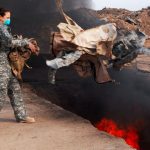
Burn pits were commonly used during the first several years of the Iraq and Afghanistan wars, and in other wars, as a place to get rid of anything the military no longer had use for, such as computers, tires, medical waste and aircraft engines. The smoke that drifted across military bases from these pits often included toxic chemicals linked to cancers and chronic respiratory illnesses.

If passed into law, the bill would require the Defense Department and Department of Veterans Affairs to ask service members and veterans who have tested positive for the virus if they were exposed to burn pits to ensure they receive proper care, according to a release from Klobuchar’s office.

Those who answer yes will be enrolled in the VA’s Airborne Hazards and Open Burn Pit Registry, unless they choose to opt out. That registry collects names of veterans who voluntarily provide their information and details about personal exposure to burn pits on deployment.

“Many of our service members and veterans are particularly vulnerable to the coronavirus pandemic, especially those who were stationed near burn pits,” Klobuchar said in a statement. “As a result of being exposed to toxic substances from burn pits during their military service, many suffer from significant respiratory illnesses, and now they may face heightened health risks during the pandemic due to previous toxic exposure. This legislation would help to ensure that they receive the care they need.”

Rounds expressed similar thoughts in a statement and said the legislation will also enable the VA’s Airborne Hazards and Burn Pits Center of Excellence in New Jersey to conduct research on how coronavirus affects individuals exposed to burn pits “so that the government can develop better protection and treatment strategies for those who have answered the nation’s call.”

“Collecting additional data and informing the treating medical professional of historical lung exposures is a critical step in understanding the risk factor of a patient affected by [coronavirus]. We support this legislation and look forward to seeing it pass,” said Derek Fronabarger, a spokesman for the Toxic Exposures in the American Military Coalition, which has offered its support for the bill. The coalition is comprised of 30 veterans organizations, including Iraq and Afghanistan Veterans of American and Wounded Warrior Project.

The legislation is cosponsored by Sens. Tammy Duckworth, D-Ill., and Dan Sullivan, R-Alaska, both of whom are veterans. Duckworth is a retired lieutenant colonel who deployed to Iraq in 2004 as a Black Hawk pilot with the Illinois Army National Guard. Sullivan is a colonel in the Marine Corps Reserve and deployed to the Middle East in 2004 and Afghanistan in 2013.

Klobuchar and Rounds teamed up in April, sending a letter to the VA asking the department to take additional measures to make certain that all at-risk veterans — including those exposed to burns pits and other toxic substances — receive the care they need during the coronavirus pandemic.

Hundreds of thousands of veterans are stuck in limbo in regards to their disability compensation because the novel coronavirus (COVID-19) pandemic has delayed compensation and pension (C&P) exams, which vets need to take in order to receive a disability rating.

The exams are usually conducted in-person, but the Department of Veterans Affairs paused over 230,000 in-person C&P exams on April 2nd to prevent the spread of COVID-19, the VA told Task & Purpose. 

Since few C&P exams can be conducted over the phone or online, many veterans are stuck on hold in terms of determining their compensation levels — and that’s attracted the attention of Congress.

“This abrupt pause to the C&P exam process has left some veterans to wonder when and how their claim will move forward,” said Rep. Elaine Luria (D-Va.) during a virtual forum on May 27 with experts from veteran service organizations.

While the congresswoman said she understood VA’s reasons for halting in-person C&P exams due to the spread of COVID-19, she argued that there also needs to be better procedures in place for ensuring a backlog doesn’t build up. According to the VA, claims pending for 125-plus days are considered “backlog.”

The build-up is made worse by logistical problems at the VA, several VSO experts said. 

Matthew Doyle, associate director for the national legislative service for the Veterans of Foreign Wars (VFW), said that several veterans’ exams were cancelled due to COVID-19, but they were still marked as no-shows by the VA. The veterans then received a notification saying that their claim had been denied due to lack of evidence.

“During the 48-hour review period, our service officers noticed that VA drafted a rating decision in which every single condition the veteran claimed was denied because ‘we have been informed that you have canceled the VA examination scheduled in support of your claim,’” Doyle said of one such incident.

Rep. Mark Takano (D-Calif.), chairman of the House Veterans Affairs Committee, lamented a lack of transparency from the VA on what it was doing to address the C&P exam disruptions.

“Unfortunately, despite this looming backlog, VA chose not to participate today,” Takano said at the forum last week. “That decision prevents Congress from learning how VA plans to resume these exams and denies veterans the opportunity to hear first-hand from the agency in charge of the process.”

The VA seems to have been listening: the day after the forum, the department announced it would resume in-person C&P exams at select locations. The department also said that it would not take a final action on a claim while a required in-person exam is pending. 

However, it was unclear what VA would do to address some of the other concerns shared by VSO experts.

When in-person exams are inadvisable

For example, both VFW and the Wounded Warrior Project warned that in-person exams may not be ideal for veterans who want to avoid traveling for fear of contracting COVID-19, or for veterans who cannot go to a VA facility easily.

“Often, one disability packet can require multiple exam visits which in turn requires the veteran to take off several days from work,” said Derek Fronabarger, government affairs director for WWP. “We believe that virtual C&P exams may resolve these challenges and will decrease barriers for veterans who are employed – or have mobility or transportation challenges.”

VA wrote in its press release that veterans outside of the in-person exam areas, or who do not yet feel comfortable receiving in-person exams, can schedule their exam for a later date, or be served through telehealth appointments. 

However, virtual or telehealth C&P exams come with their own limitations, VSO experts said. Many of the C&P exams cannot be performed completely virtually. 

Earlier in the pandemic, the Veterans Benefits Administration increased the number of authorized tele-C&P exam Disability Benefit Questionnaires (DBQs) from 16 to 29, Fronabarger said. 

While the WWP expert applauded that move, he pointed out that only one of the 29 exams, the supplemental claims for already-established PTSD, can be performed completely virtually.

For the 28 other exams, VA requires an ‘in-home tele-practitioner,’ to assist the medical specialist performing the virtual exam, Fronabarger explained, which is a challenge when the whole point of staying home during COVID-19 is to avoid contact with other people.

“This is obviously the largest barrier we have identified in transitioning from in-person exams to a virtual model,” he said.

To remove that barrier, Fronabarger recommended VA review all 29 DBQs and waive some of the in-home tele-practitioner requirements. For example, some of the C&P exams require the tele-practitioner just to check blood pressure and temperature, which could be dropped from the exam requirements when possible, Fronabarger wrote.

Fronabarger also recommended VA work with third-party contractors or possibly VSOs to have mobile practitioners who could assist with virtual exams when practitioner requirements are not waivable. WWP’s Independence Program already provides in-home assistance for veterans with limited mobility, so that could be used to help administer C&P exams, he said.

“This would also help those who have limited mobility even after the COVID-19 pandemic is over,” he wrote.

More and more paperwork

VFW pointed out even more problems. For example, in late April, the VA ended the decades-long practice of giving VSOs 48 hours to help veterans review their benefits decisions for accuracy before being finalized, Connecting Vets reported.

 Getting rid of that window is bad news for vets, VFW said.

“Veterans will now receive these kinds of erroneous decisions and have to file more paperwork to fix this problem,” Doyle said. “Moreover, our advocates must use complex workarounds and tracking methods outside of [veterans benefits management system] in the hopes of finding all of our recent decisions, in order to conduct a proper quality review.”

The VA made things even more difficult by removing public-facing DBQs from its website in April, Doyle added. Veterans often consult private medical providers to get an independent opinion about their service-connected disabilities, and DBQs filled out by a private medical provider help strengthen a veteran’s claims, he explained. 

However, that can no longer be done now.

“[The] VA’s removal of public-facing DBQs amidst the crisis, was both imprudent and incomprehensible,” said Doyle, who endorsed Rep. Andy Barr (R-Ky.)’s “Veterans Benefits Fairness and Transparency Act” as a way to correct the problem.

Contractor headaches

However, there are still more problems with telehealth C&P exams, namely that the contractors VA hires to conduct its virtual C&P exams have a spotty track record. 

Rich Loeb, senior policy counsel for the American Federation of Government Employees (AFGE), said exams conducted by private contractors are more likely to have errors in them, which slows down the process by requiring follow-up exams.

In contrast, VA clinicians have specialized knowledge, skills and experience that reduce the likelihood of such errors, Loeb said.

“This specialized workforce benefits veterans in several ways, including by using and developing examiners who know exactly what to look for during C&P exams, often leading to more thorough examinations that are less likely to be sent for a costly re-examination,” Loeb wrote in a statement.

Elizabeth Curda, a director in the Government Accountability Office’s Education, Workforce and Income Security team, confirmed some of Loeb’s claims about the reliability of VA’s C&P exam contractors. In 2018, her office published a report on how the VA needed to increase its oversight of private contractors that conduct medical exams.

“We found the agency does not know the extent to which contractors are meeting the exam contract’s quality and timeliness standards,” GAO wrote at the time. “The agency identified some contractor performance problems, but the incomplete information gathered on performance highlights the inadequacy of VBA’s oversight.”

In September, the Government Accountability Office published a report on how VBA was implementing its recommendations for improving oversight. On the plus side, the agency had made fixes to its exam management system and begun auditing training for contract examiners to ensure the contractors were meeting training requirements, Curda said.

However, none of the GAO’s recommendations had been fully implemented, “so we do have some concerns about their ability to fully oversee the contracted examiners, especially under these circumstances where a large backlog of claims is building,” Curda said in the virtual forum.

For example, VA still hasn’t fully resolved its exam management system issues, which it needs in order to track the completion of exams and the payment of contractors, Curda explained. Without that system, VA will also have a hard time analyzing the exam backlog and coming up with ways to fix it.

Cutting down the backlog

Keeping track of its contractors is a vital step for VA, since 61% of all C&P exams are conducted by VBA contractors, Luria said at the forum. The inability to conduct in-person exams has also heavily increased the burden on contractors, she explained, and the backlog has increased with it. 

Between April 11 and May 16, VA public data showed that backlogged claims went up from 75,000 to 100,000, she said.

“This means in the first month without in-person C&P exams we’ve seen a huge spike in the backlog,” Luria said. “This tells me we must have a plan to keep vets safe but also keep claims moving forward.”

The number of pending exams could reach more than a million by December if things remain unchanged, Luria said. However, that was before VA said on Thursday that it would resume in-person C&P exams at select locations.

Fronabarger said he was encouraged by the move, and he was confident VA would improve its telehealth C&P exams.

“The moves that have been made to digital for healthcare options, diagnosis, and treatment, is new territory for many health organizations, including the Department of Veterans Affairs,” he told Task & Purpose. “There will be growing pains and some trial and error as this gets fine-tuned. But we’ve seen a willingness from the VA to evolve, grow, and modernize their systems and processes during the COVID-19 crisis.”

Fronabarger says he hopes the telehealth adjustment will continue post-pandemic.

“It makes sense for some veterans to utilize a digital offering or telehealth option instead of driving three-to-four hours to the nearest capable VA facility,” he wrote.

As the coronavirus pandemic continues in the United States, veteran advocates have increasingly warned that the economic downturn could lead to more homeless vets. 

But the Department of Veterans Affairs is limited in what help it can offer. VA even put out a public call for donations to help.

Now, lawmakers are stepping in aiming to change that. 

Reps. Gus Bilirakis, R-Fla., and Mike Levin, D-Calif., in the House and Sens. Dan Sullivan, R-Ark., and Kyrsten Sinema, D-Ariz., in the Senate, introduced the Homeless Veteran Coronavirus Response Act Thursday. 

Thousands of homeless veterans have seen shelters shutter, funding and resources dry up and access to services all but evaporate as the virus spread across the country, advocates said. The new bill aims to allow VA to use existing funds for a wider range of services to help. 

Congress already provided VA nearly $20 billion in emergency pandemic response funds, and about $300 million of that $20 billion was allocated for homeless veterans’ needs, though advocates say they need closer to $1.3 billion.

The $300 million was intended to help house homeless vets in hotels and pay for testing for those who fell ill. VA does not currently have the authority to provide food, phones or other supplies to homeless veterans, VA officials told Connecting Vets.

Tens of thousands of veterans are homeless on any given night in America, and more than 1.4 million were at risk of becoming homeless before the pandemic struck. Now, advocates say there could be a spike in the number of homeless veterans, a population at elevated risk for the virus.

Avoiding a major spike in veteran homelessness “will require significant investment in programs to serve homeless veterans,” Kathryn Monet, CEO of the National Coalition of Homeless Veterans, told lawmakers previously.

“The coronavirus pandemic has exacerbated the crisis of veteran homelessness that we were already facing, and we must do more to get our nation’s heroes off the streets,” Levin said in a statement Thursday. “Our legislation takes commonsense steps to facilitate shelters, transitional housing and other services for veterans and their families in the face of public health challenges. We must expand these services as soon as possible.” 

“During this pandemic, we want to provide a safety net for our most vulnerable populations — especially those who have honorably served our nation,” Bilirakis said. “This bipartisan bill provides much-needed emergency relief.” 

Specifically, the bill would:

  • Allow VA to use existing homelessness funding to provide food, shelter, transportation, clothing, blankets, hygiene items and “telecommunications equipment” during the COVID-19 emergency;
  • Allow VA to collaborate with outside groups to manage the use of its property, buildings or other facilities as temporary shelters;
  • Increases the maximum Grant and Per Diem (GPD) per diem rate;
  • Allows GPD providers to use per diem payments for food, shelter, clothing, blankets, hygiene items and more, as well as formerly homeless veterans now living in facilities operated by GPD recipients;
  • Allows VA to provide GPD payments for additional traditional housing beds without notice or competition during the crisis;
  • Allows VA to waive some inspection and code requirements during the emergency if the facility meets local safety requirements, to allow for quicker identification of alternative sites, facilitate social distancing or isolation and more;
  • Requires VA ensure veterans participating in a VA homeless program have access to VA telehealth services they are eligible for during the pandemic emergency.

Top Veterans Affairs lawmakers in the House and Senate also sponsored the legislation. 

“As the COVID-19 pandemic exacerbates economic challenges and veteran unemployment rises to almost 12 percent, we must take immediate steps to assist the tens of thousands of homeless veterans,” said House Veterans Affairs Committee Chairman Mark Takano, D-Calif. “This new legislation … will help ensure we can support our most vulnerable veterans throughout this crisis by providing food, safe shelter and access to VA telehealth services.”

“Supporting veterans who are homeless or at-risk by providing housing, healthcare, and other necessities has long been one of our committee’s top priorities,” said Committee ranking member Phil Roe, R-Tenn. “I am proud to cosponsor this bill … to continue our work to make sure that the most vulnerable veterans are taken care of during the COVID-19 pandemic and long after.”

To help VA and homeless veterans: 

  • Donate food, cell phones or household goods by contacting your local voluntary service office.
  • To make large donatiosn or donations to multiple locations, contact Sabrina Clark, director of VA Voluntary Service at VHACO10B2AStaff@va.gov.
  • Use the eDonate option on VA’s website to donate online and be sure to specify that you want the money to be used to help veterans who are homeless or at-risk of homelessness.